
We sell two cheats for Battlefield 6, and the honest answer to which one is better is that it depends on how you play. Frost has things Hydra does not, Hydra has things Frost does not, and the differences are specific enough that picking the wrong one for your play style is a real mistake. Here is the full comparison, feature by feature.
The short version
- Streaming or recording? Frost. It does not show up in OBS capture.
- Playing Redsec? Hydra, for the vehicle and object ESP.
- Want the finest control over how human your aim looks? Frost, for hitbox priority and retarget delay.
- Sniping, or want a radar instead of full ESP? Hydra.
Where Frost wins
It is stream proof. Frost does not get picked up by OBS, so if you record or stream, this is the safer of the two by a wide margin. That single property decides the choice for a lot of people before any other feature matters.
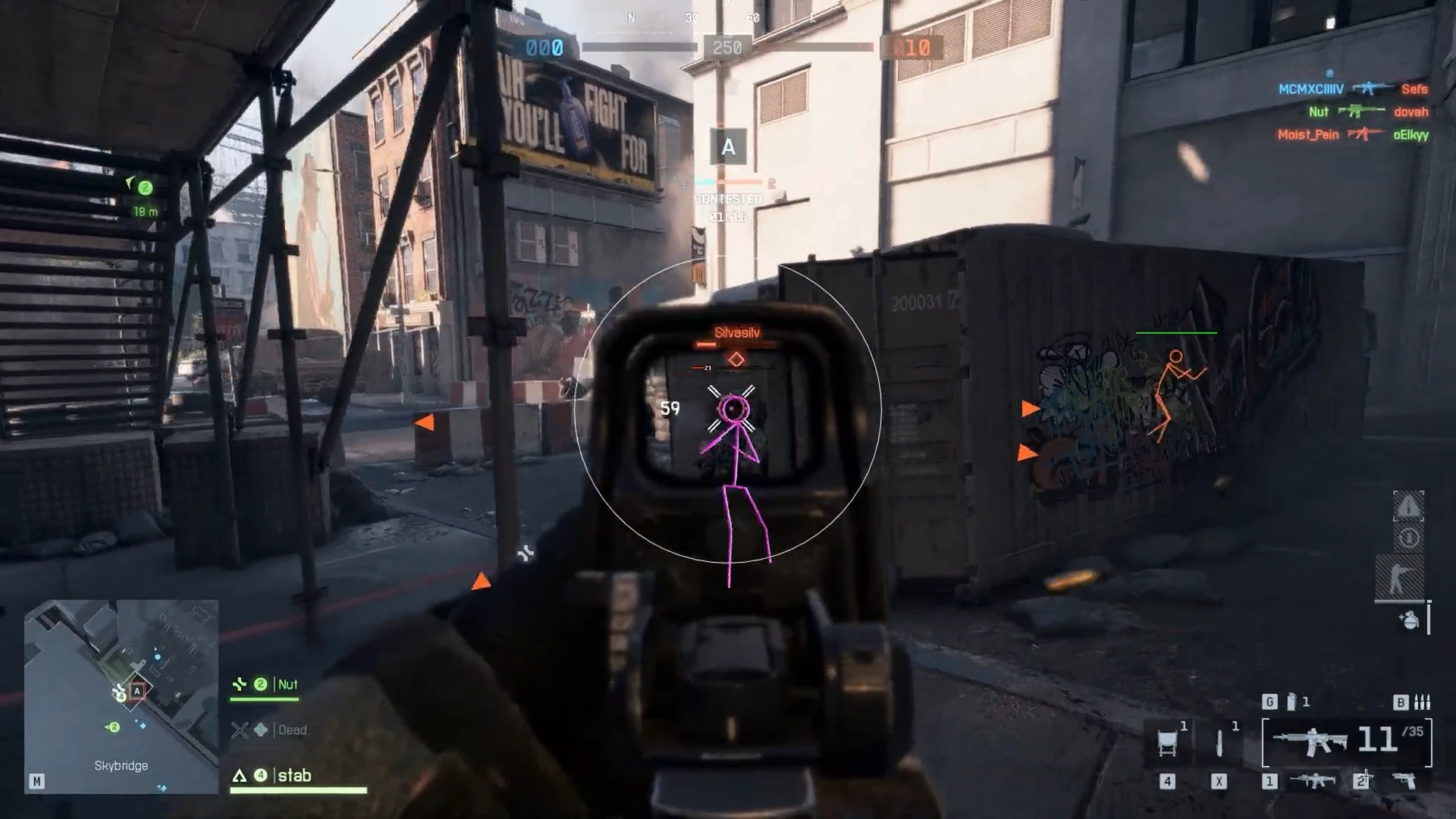
Hitbox priority rather than on-or-off. Frost lets you weight each hitbox instead of just enabling it. Disabled, low, medium and high are colour-coded in the menu, so you can tell the aimbot to strongly prefer the chest and only occasionally consider the head. Hydra only lets you toggle hitboxes on or off.
Retarget time. This is the setting that matters most for staying unnoticed and almost nobody talks about it. Without it, killing one player and acquiring the next looks like two instant snaps back to back, which no human does. Retarget time inserts a delay in milliseconds between targets so the transition reads as a person reacquiring rather than software switching.
Triggerbot with its own filters. You do not want your triggerbot configured like your aimbot. Frost separates them, so you can run a triggerbot that deliberately avoids headshots, ignores teammates and will not fire through walls, while your aimbot keeps different settings entirely. Scoping in and letting the triggerbot fire means you can play a low FOV and use it as a panic button.
Bot ESP. Frost renders bots, so you can practise your setup in a private match against AI. Hydra only shows real players, which makes dialling in a config harder.
Overlay FPS matching. If a cheat has ever felt laggy to you, this is usually why: the overlay is running at a different frame rate to the game. Frost lets you cap the overlay so you can match it to your in-game FPS, and the stutter disappears.
Where Hydra wins
Vehicle ESP. Frost does not have it. In Redsec, where vehicles decide rotations and third parties, seeing them through terrain is a genuine advantage.
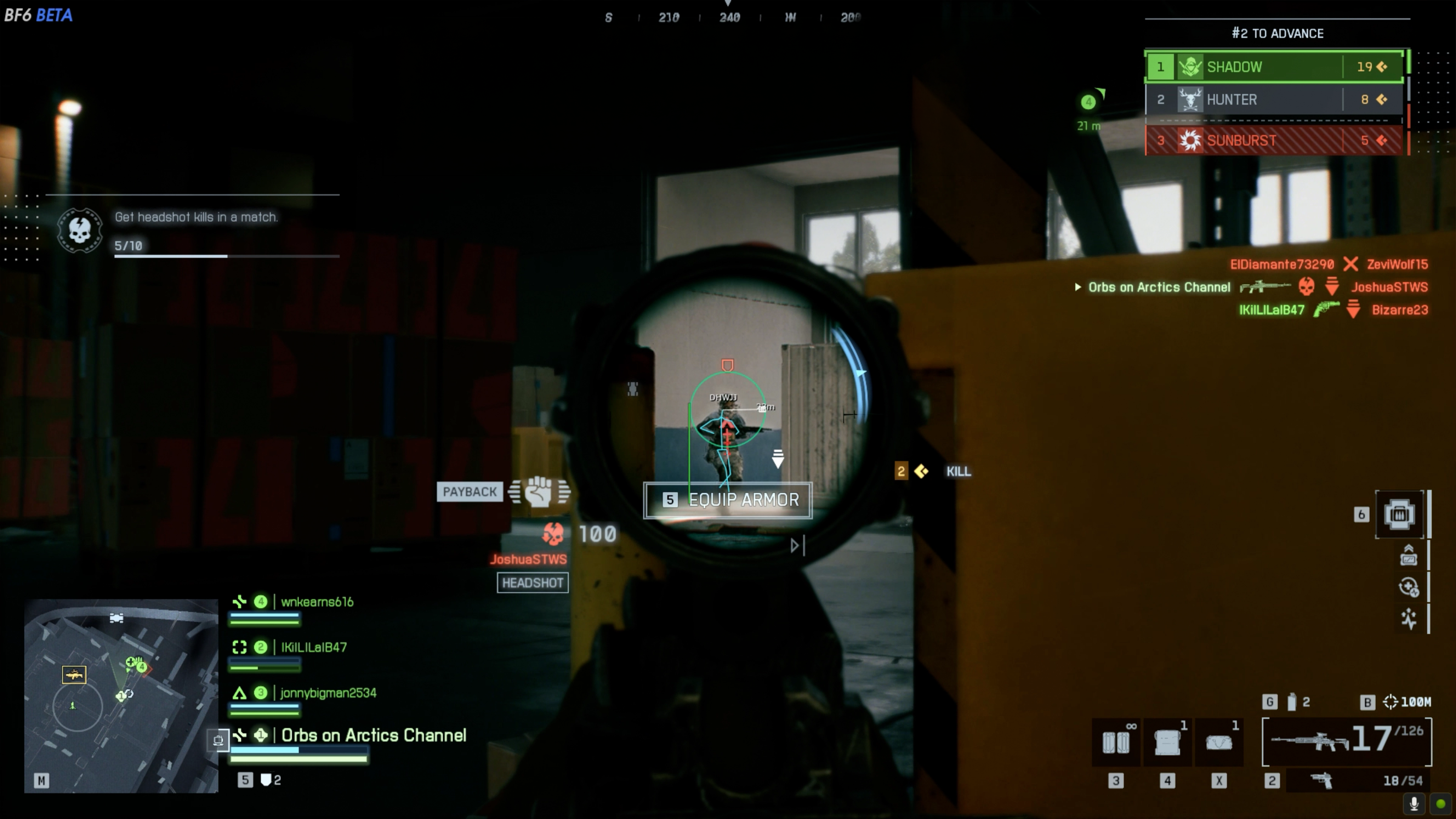
Object ESP with per-item colours. Hydra lets you pick exactly what you want rendered: mines, supply bags, loot, grenades, each in its own colour so the screen does not turn into one indistinguishable pile. Frost is built more for multiplayer, Hydra leans toward Redsec.
The radar. Hydra's radar system is strong enough to run on its own. If full ESP feels too blatant for you, a radar gives you positional awareness with far less on screen, which is a legitimately safer way to play.
A much larger FOV range. Hydra goes up to 2000, though that is not a recommendation. For close quarters you want a small circle anyway, and a huge FOV is one of the fastest ways to look obviously assisted.
Crosshair customisation and infinite breath. You can build your own crosshair down to size, gap, thickness and colour. And for snipers, infinite breath removes scope sway entirely, which is the kind of quality-of-life feature you notice every single game.
Tracking that feels smoother. In our own testing the tracking on Hydra reads as less blatant, though config plays a large part in that and the same result is achievable on Frost with the right settings.
Detection history, stated plainly
Frost has a clean record on Battlefield 6 and has not been detected. Hydra was detected once, when the game first launched, and accounts were banned as a result. It has not been detected since. We would rather tell you that than pretend the history does not exist, and it is the reason Frost is the recommendation for anyone whose account really matters to them.
That said, a detection record is a fact that can change on any given day, for either of them. Check the Frost status page and the Hydra status page before every session rather than trusting this article, which is a snapshot.
How to actually decide
If the choice is close, buy a one-day or three-day key for each and run them both. They are cheap enough that testing costs less than being wrong for a month, and the differences above are the kind you feel within a couple of matches rather than something you can settle from a feature list.
Frost and Hydra are both on the Battlefield 6 page with the full key options.
Frequently asked questions
Which is better for streamers?
Frost, without much debate. It is not captured by OBS, so the overlay does not appear in your recording or on stream.
Which is better for Redsec?
Hydra. Vehicle ESP and per-object loot rendering are built for a battle royale, and Frost does not have either.
Can I buy both?
Yes, and for a lot of people that is the right answer: Hydra for Redsec, Frost for multiplayer and for anything you record.
Prefer to watch: the full side-by-side is on our YouTube channel.