
Free R6 cheats exist. Anyone telling you otherwise is selling something, and we sell something, so let us be straight with you from the first line. You can find a free Rainbow Six loader in about four minutes on Discord or YouTube. The question this page answers is not whether free cheats exist. It is what they cost you, because the price is not zero, it is just paid later and in a currency you care about more than money: the account you have been levelling since whichever season you started.
What "free" actually costs in R6
Siege is free to play now, which makes people think a ban is cheap. It is not, because the account is not the game. The account is your rank, your operators, your alpha packs, your charms, your elo and every hour that produced them. A new one starts at Copper with nothing, and you cannot buy those hours back at any price.
Then there is the part most people find out afterwards. Siege bans reach past the account. If your hardware gets flagged, a fresh account on the same PC gets banned too, sometimes within a match or two, and the only route back is a spoofer. So the real bill for a free cheat looks like this:
| What you lose | What it costs to get back |
|---|---|
| Rank, operators, skins, elo | Not purchasable. Hundreds of hours. |
| A clean account | A new one, then levelling it from zero |
| A clean HWID | A spoofer purchase you did not plan for |
| The cheat itself | Gone the day it is detected, with no support to ask |
Compare that to the thing the free download is competing with: Inferno starts at $7.99. That is the whole argument. One burnt account costs you more than a year of a cheat that is actually maintained.
Why free R6 cheats get caught so fast
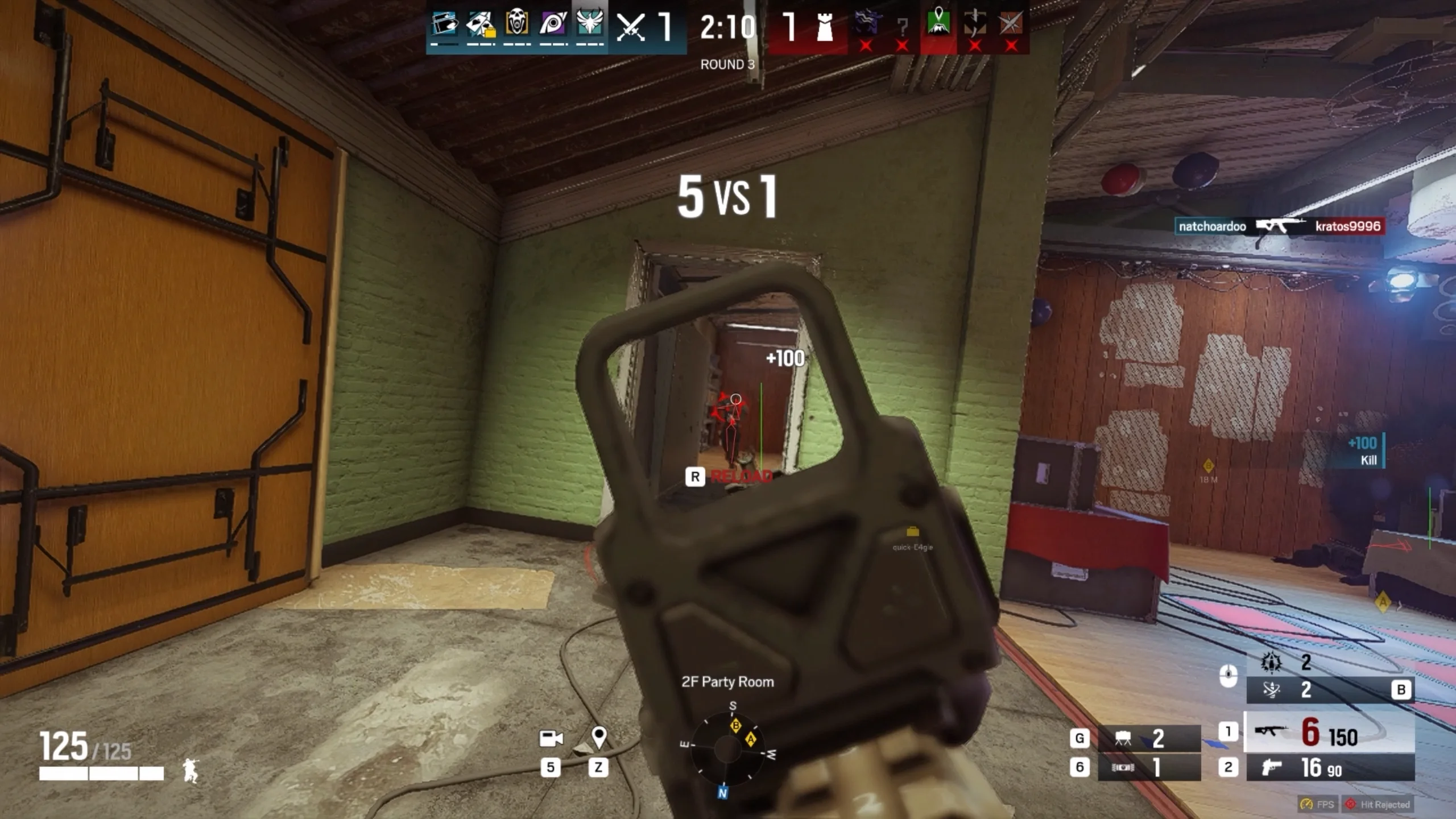
This is economics, not luck. A free cheat is public, and public means anti-cheat has a copy. BattlEye and Ubisoft's team can download the same file you did, run it, and write a signature for it. There is no version of this where a file that thousands of strangers can grab stays invisible to the one company paid to look for it.
Then ask who fixes it. A paid provider has revenue, so somebody is employed to push an update the day a patch lands. A free cheat has no revenue, so when it breaks, it breaks. Nobody owes you a fix, there is no status page telling you it is down, and you find out it is detected the way everybody finds out: mid-match, with a ban screen.
That is the difference the money buys. Not better features. A maintenance cycle.
Worth knowing how brutal that cadence is even for funded products. EA published figures for Battlefield 6 in November 2025: of 190 cheat programs, vendors and resellers it was tracking, 183 had announced feature failures, detection notices, downtime, or gone offline entirely. That is 96 percent, and those are the ones with staff and revenue. The difference is not that paid builds never get caught. It is that somebody is there to rebuild them, and to tell you they are down before you inject.
The download itself is a risk
Set bans aside for a second and look at what you are being asked to run. A free cheat arrives as a closed executable from a stranger, usually through a Discord link or a YouTube description, with no signature and no way to inspect what is inside. It needs high privileges to work, so you grant them. And almost every free loader asks you to disable your antivirus before running it, which is exactly what you would ask for if the file were malicious and exactly what you would ask for if it were not.
You cannot tell those two cases apart from the outside, and you are typing your Ubisoft and Steam passwords on the same machine. That is the trade you accept when the price tag is zero: you have no supplier, no recourse, and no way to verify anything.
This is not a hypothetical risk, and it is one of the few parts of this subject with hard numbers attached. Kaspersky counted more than 19 million attempted downloads of malicious files disguised as popular games between April 2024 and March 2025, affecting over 400,000 users, with cheats and cracked versions named among the lures. In October 2025 Check Point Research worked with Google to pull more than 3,000 malicious YouTube videos advertising game hacks and cracked software, and reported the volume had tripled that year. And when Sophos traced 141 GitHub repositories back to a single operator in June 2025, 133 were backdoored, and 58 percent of them were advertised as video game cheats.
ESET put the mechanism plainly in its H1 2024 threat report: cracked games and cheating tools for online multiplayer were found carrying infostealers including Lumma and RedLine. Those are the families that take browser logins, session cookies, Discord tokens and wallet keys. In other words the thing being stolen is not your game account, it is everything else you are signed into.
When a free cheat is genuinely the right call
We are not going to pretend there is never a case. There is:
- A throwaway account you do not care about. If the account has no rank and no purchases and you are testing something for an afternoon, the downside really is close to zero, provided you accept the hardware risk on your main PC.
- You genuinely cannot spend anything. That is a real situation and we are not going to lecture you about it. Just go in knowing the account is spent, not borrowed.
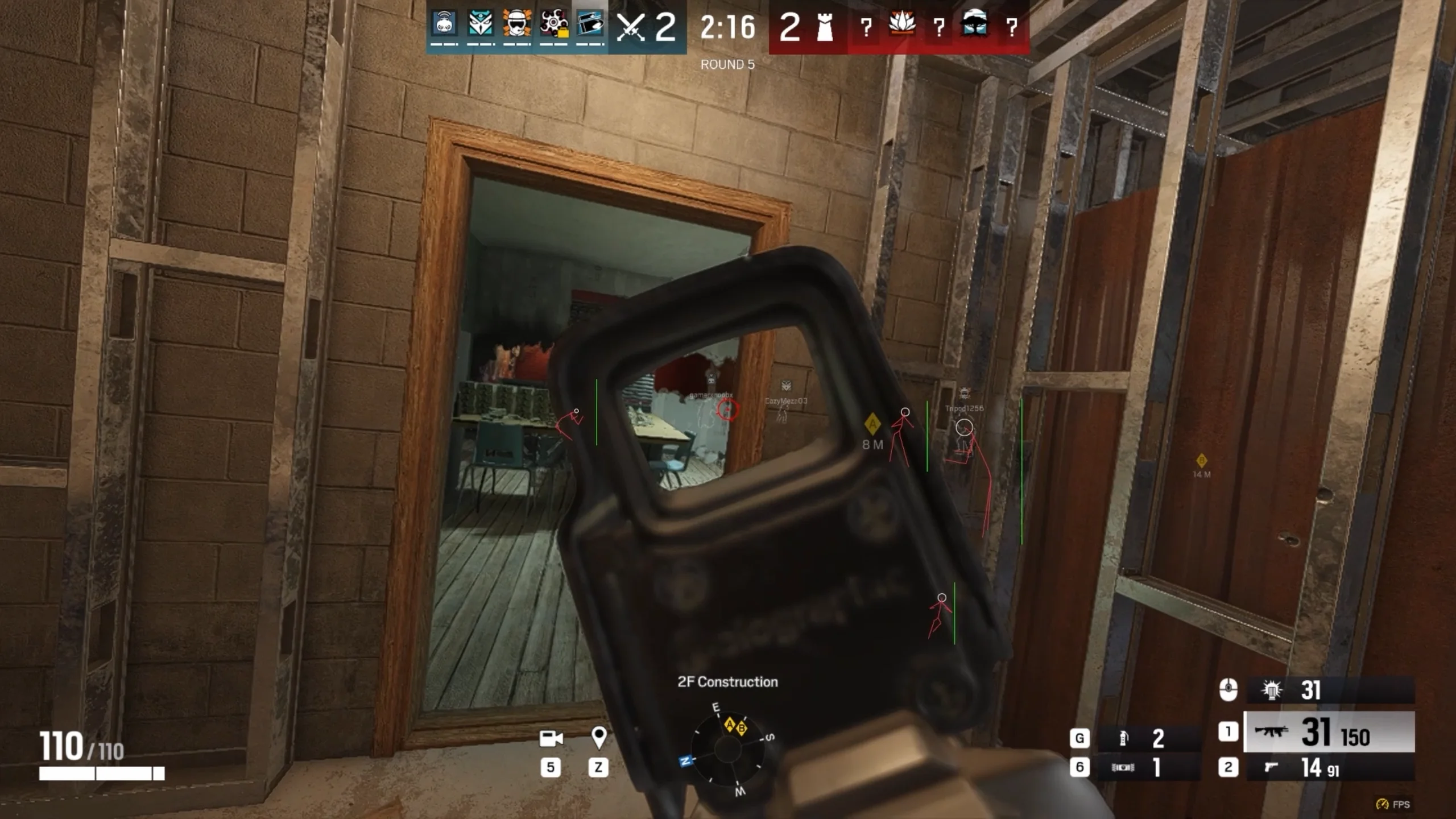
- You want to see what cheating even looks like before deciding whether it is for you.
What we would push back on is using a free cheat on an account you would be upset to lose. That is not saving money, it is deferring a bill.
What to do instead if the account matters
Start at the cheap end, not the expensive one. Inferno is $7.99 and ESP-first, which is the build our own R6 buyer's guide recommends for most legit players over our more expensive options. Every R6 cheat we sell is on the Rainbow Six Siege cheats page. Check the status board before you buy so you can see the current detection state of the exact product, which is the thing no free download will ever show you. And read how R6 actually catches cheaters, because the biggest ban factor is not which cheat you run, it is how obviously you play.
Frequently asked questions
Are free R6 cheats safe?
Safe from bans, no: a public file is a file anti-cheat can obtain and signature, and nobody is funded to update it after that. Safe to run on your PC is a separate question you cannot answer, because you are executing an unsigned binary from an anonymous source with your antivirus turned off, on the machine where you log into Ubisoft and Steam.
Why do free cheats get you banned so quickly?
Because free means public, public means anti-cheat has a sample, and no revenue means nobody pushes a fix when the signature lands. The detection is not bad luck, it is the business model working exactly as you would expect.
Is a paid R6 cheat actually different?
The features overlap more than sellers admit. What differs is maintenance: a revenue stream funds someone to update the build, a private distribution keeps fewer samples in circulation, and a published status board means you can check the state before you inject. That is what $7.99 buys.
What is the cheapest safe way to try cheating in Siege?
A one-day key on a build with a live status, so the total exposure is a few dollars and one evening. Our R6 lineup starts at $7.99.