
Free Fortnite cheats are everywhere, and the pitch writes itself: the game is free, so what is there to lose? That question has a real answer, and it is not "nothing". Fortnite is free to play, which means the thing a ban takes from you is not a game licence, it is the account, and on Fortnite the account is usually the expensive part. This page prices that trade honestly. We sell the paid alternative, so check every number here against our store as you read.
What a Fortnite ban actually costs
Because the client is free, people assume a ban is a free do-over. It is not, for two reasons. The first is cosmetic: skins, battle passes, V-Bucks and account level do not transfer, and nothing sold in the item shop can be bought back onto a new account. The second is the one that catches people out. Epic bans by hardware as well as by account, so a fresh login on the same machine can follow the first one down within a day.
| What a ban costs you | What the paid route costs |
|---|---|
| Every skin, emote and battle pass on the account | Not for sale at any price |
| Unspent V-Bucks and Save the World progress | Not for sale at any price |
| A clean hardware fingerprint, once Epic flags the PC | Hydra from $8.99 ships with a spoofer built in |
| A standalone spoofer, if you get flagged without one | Trace 2.0 from $44.99 |
Read the right column honestly and the free download stops looking free. A maintained build with a spoofer bundled is $8.99. Cleaning up after a hardware ban you did not plan for starts at $44.99, and the locker is simply gone. The free option is only cheaper inside the window before it fails, and you do not get to pick how long that window is.
Why free Fortnite cheats get detected
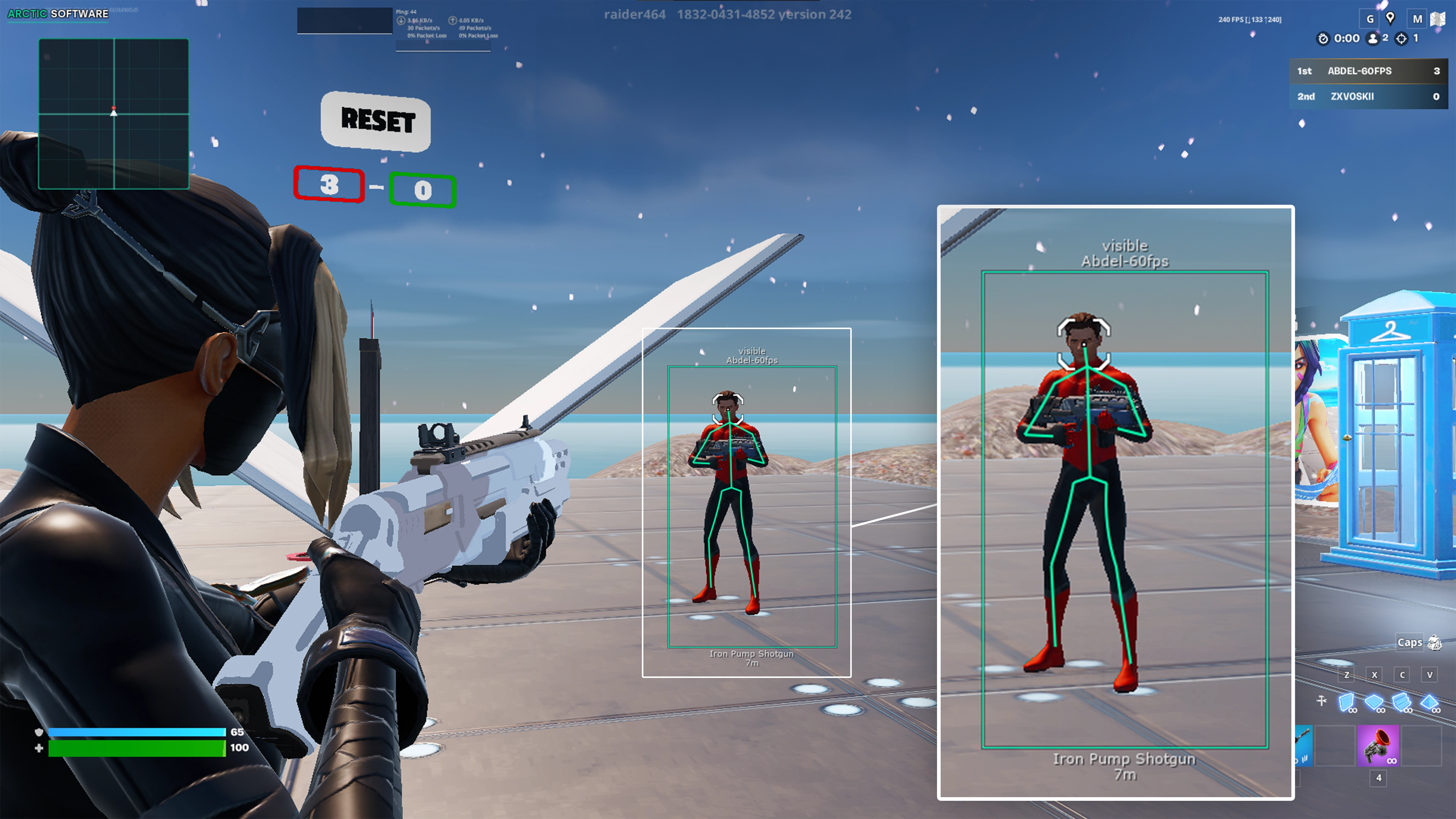
Fortnite runs Easy Anti-Cheat and BattlEye, two of the most actively developed anti-cheats in the industry, on one of the most cheated games in the world. That combination means Epic has both the budget and the incentive to break public cheats quickly.
And a free cheat is the easiest possible target. Anti-cheat vendors work by obtaining the cheat and signaturing it, and a build anyone can download is a build they can download too. There is no gatekeeping, no vetting, no per-user build. It goes into the sample pile the week it appears.
Then there is maintenance. Fortnite patches constantly and reworks its chapters wholesale, and nothing about a free release funds somebody to sit there rebuilding after every update. So the pattern repeats: the free build works, an update lands, it silently stops being safe, and a ban wave collects everyone still running it weeks later.
Worth knowing how brutal that cadence is even for funded products. EA published figures for Battlefield 6 in November 2025: of 190 cheat programs, vendors and resellers it was tracking, 183 had announced feature failures, detection notices, downtime, or had gone offline entirely. That is 96 percent, and those are the ones with staff and revenue. The difference is not that paid builds never get caught. It is that somebody is there to rebuild them, and to tell you they are down before you inject.
The download is its own risk
Look at the mechanics of getting a free Fortnite cheat. You follow a Discord invite or a YouTube description to a file host, you download an unsigned executable from someone anonymous, you are told to disable your antivirus first, and you run it with high privileges on the PC where your Epic account and your browser are logged in. There is no way to inspect a closed binary from the outside, and no supplier to hold responsible afterwards.
Note that "turn off your antivirus" is genuinely what a legitimate cheat loader needs you to do, and also exactly what a credential stealer needs you to do. From where you are standing, those two files look identical. That ambiguity is the actual product you are accepting for free.
This is not a hypothetical risk, and it is one of the few parts of this subject with hard numbers attached. Kaspersky counted more than 19 million attempted downloads of malicious files disguised as popular games between April 2024 and March 2025, affecting over 400,000 users, with cheats and cracked versions named among the lures. In October 2025 Check Point Research worked with Google to pull more than 3,000 malicious YouTube videos advertising game hacks and cracked software, and reported the volume had tripled that year. And when Sophos traced 141 GitHub repositories back to a single operator in June 2025, 133 were backdoored, and 58 percent of them were advertised as video game cheats.
ESET put the mechanism plainly in its H1 2024 threat report: cracked games and cheating tools for online multiplayer were found carrying infostealers including Lumma and RedLine. Those are the families that take browser logins, session cookies, Discord tokens and wallet keys. On Fortnite specifically that matters twice over, because the Epic account people are trying to protect is usually secured by the same browser session the stealer is reading.
When free genuinely makes sense
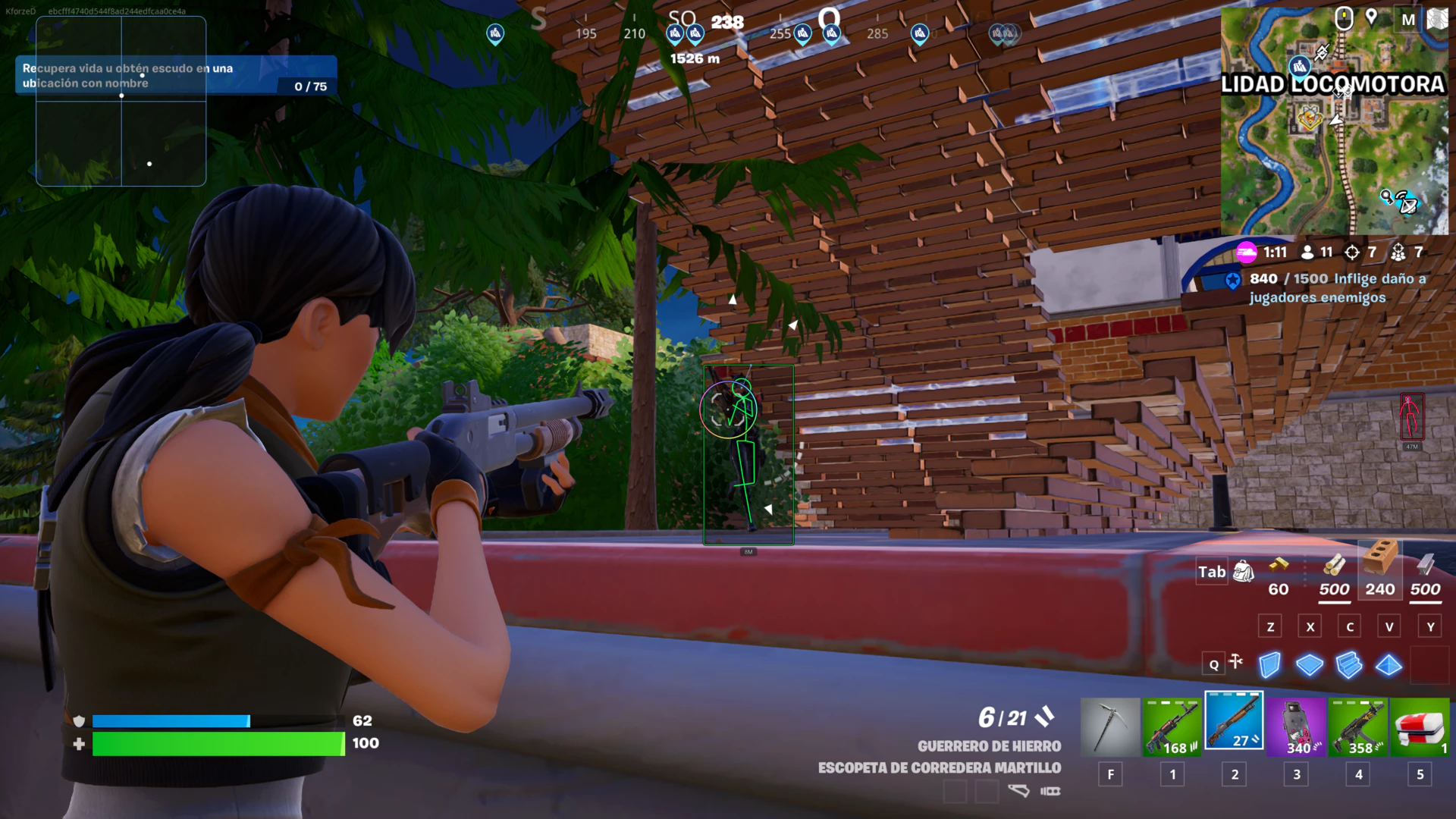
Some honest cases where we would not argue with you:
- A throwaway account with an empty locker, on a machine you do not mind flagging. If there is nothing on the account, the maths genuinely changes.
- You are not spending money right now. Fair enough. Just treat the account as spent from the moment you inject, not as something you might keep.
- Seeing what cheating in Fortnite even looks like before you decide whether you want it at all.
The case we would push back on is a main account with a locker on it, on your main PC. That is the scenario where free is the most expensive option on the table, because the hardware flag follows you to the replacement account too.
The cheaper honest route
Hydra starts at $8.99 and includes a spoofer, which is the part most people forget to budget for. Frost is $9.99 if you want the fuller feature set. Check the live status board for the exact product before you spend anything, which is a thing no free loader will ever offer you. Our Fortnite buyer's guide compares the three builds we sell and says who each is for, the ban-avoidance guide covers the behaviour that gets people caught regardless of what they run, and how HWID spoofers work explains the hardware side properly.
Frequently asked questions
Are free Fortnite cheats safe?
No, on two separate counts. The cheat itself is the easiest thing in the world for Easy Anti-Cheat and BattlEye to obtain and signature, so detection is a question of when. And the file you are downloading is unsigned software from an anonymous source that asks you to disable your antivirus first, which is the same instruction a credential stealer needs.
Will a Fortnite ban affect my whole PC?
It can. Epic bans by hardware as well as by account, so a new account created on the same machine can be banned quickly without you doing anything on it. That is why a spoofer matters more on Fortnite than on games that only ban the login, and why our Hydra build includes one.
Can I get my skins back after a ban?
No. Cosmetics, battle passes, V-Bucks and Save the World progress are tied to the banned account and cannot be moved or repurchased onto a new one. This is the cost people underestimate most, because the game itself was free.
Is a paid Fortnite cheat guaranteed not to get banned?
No, and anyone promising that is lying to you. What a paid build gives you is somebody maintaining it through updates and a public status page that says when it is not safe to run. Check the status board before every session and do not play while a product reads anything other than undetected.