

For most players a ban lands on the account. For some it lands on the machine. You make a new account, launch the game, and you are banned before you reach the loading screen. That is a hardware ban, and it turns an expensive PC into a paperweight for your favourite game. An HWID spoofer is the tool that gets you back in, and understanding how it works tells you a lot about which ones are worth buying.
What a hardware ban actually is
People assume a ban is tied to an email or an IP, both of which are trivial to change. A hardware ban goes deeper. Anti-cheats like Vanguard and Ricochet read unique serial numbers off your machine: disk drives, motherboard, MAC address, GPU, CPU. Those get stitched together into a hardware fingerprint. If your fingerprint is on the blacklist, no new account will help you, because the game recognises the machine before it ever looks at who is logging in.
How an HWID spoofer answers that
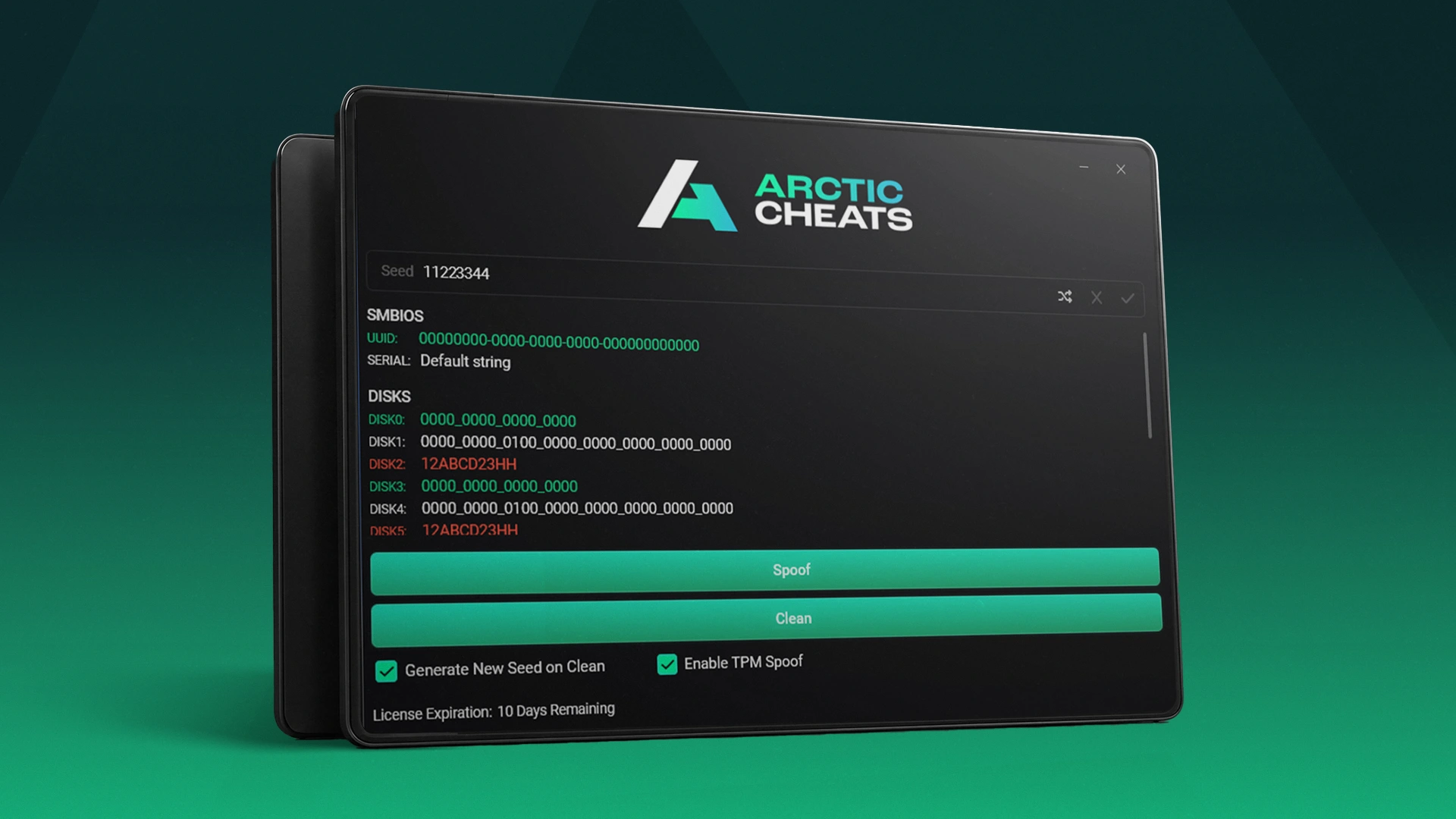
A spoofer does not unban you on the game's servers. It changes what the game sees. It sits between the game and Windows, and when the game asks for the serial number of your drive, the spoofer intercepts that request and returns a randomised string instead. The fingerprint the anti-cheat builds is then a fingerprint of a machine that has never been banned.
The good ones run at the kernel level, sometimes called ring zero, which means they load before the anti-cheat is even awake. That ordering is what makes the fake identity the only one the game ever sees. From the user's side it is a single button: run the software, hit spoof, launch the game.
Not every game bans the same components
This is the part most guides miss. Each anti-cheat targets its own set of components, and they do not overlap neatly. Some go as far as flagging a monitor serial. That is the real argument for buying a maintained spoofer instead of grabbing something free: the developers have already worked out which components each game checks, and they keep that research current as anti-cheats change.
And they do change constantly. Detection gets updated, spoofers get updated in response, and a tool that was excellent six months ago may be useless now. What you want is one that stays updated, stays hidden and runs at kernel level.
Temporary versus permanent spoofing
Temporary spoofers reset your serials to their real values when you restart the PC, which sounds like a limitation and is actually useful. Nothing is permanently altered, so you can sell or repurpose the machine later, and you are not carrying a modified fingerprint around when you are not playing. Permanent spoofers persist across reboots instead. Which you want depends on how often you play and how much you care about the machine's original identity.
Which HWID spoofer to run
We sell two: Trace 2.0 and Verse, our permanent option. Both are on the HWID spoofers page, and their current state is on the live status board. Several of our game cheats also bundle a spoofer that runs automatically alongside the cheat, so check the product page before buying a separate one.
HWID spoofer questions
Can I get banned for using a spoofer?
Spoofing itself is not what games are hunting for; they are hunting for cheats. The risk sits with what you do after you spoof, which is why a spoofer pairs with sensible play rather than replacing it.
Does a spoofer unban my account?
No. It changes what the hardware looks like, so a new account works on the same machine. The banned account stays banned.
Do I still need a spoofer if my cheat includes one?
Usually not. Several of our cheats run one automatically. A standalone tool is for players who are already hardware banned, or who want a spoofer for a game we do not sell a cheat for.
Prefer to watch: this guide is also on our YouTube channel.