

We have made this video for almost every game we sell: Rust, Arc Raiders, Rainbow Six, Battlefield, Fortnite, Apex, Warzone. The games change, the menus change, and the answer never does. Whether you keep an account comes down to three things, in this order: how your cheat is configured, what your account history looks like, and whether the software is any good. Everything else is detail.
Pillar one: a config that does not look like software
Running around hitting nothing but headshots is the fastest way to lose an account in any game on this list. The fix is what people call a legit config, and it is two features and three settings.
Smoothing decides how human your aim looks. At zero the crosshair snaps onto targets and it is obvious to anyone watching. Raised, the aim slides onto target and reads as someone with good mechanics. A detail most guides miss: you can drop it slightly in close quarters, where fast movement is believable, and you should raise it for long-range shots, where a snap is unmistakable. Treat smoothing as a dial for how human you need to look in that specific moment.
Visible check stops the aimbot from targeting anyone behind a wall, and it is not optional. Pre-firing a corner is one thing. Pre-firing a corner while your aim tracks a player through the wall as you turn is a guaranteed report in any game with a killcam or a replay.
ESP discipline is the part that has nothing to do with settings. The most common tell is staring at a door because your ESP says someone is behind it. A legitimate player would be checking another angle, reloading, or looking at the map. Use the information with your peripheral awareness instead of pointing your crosshair at it.
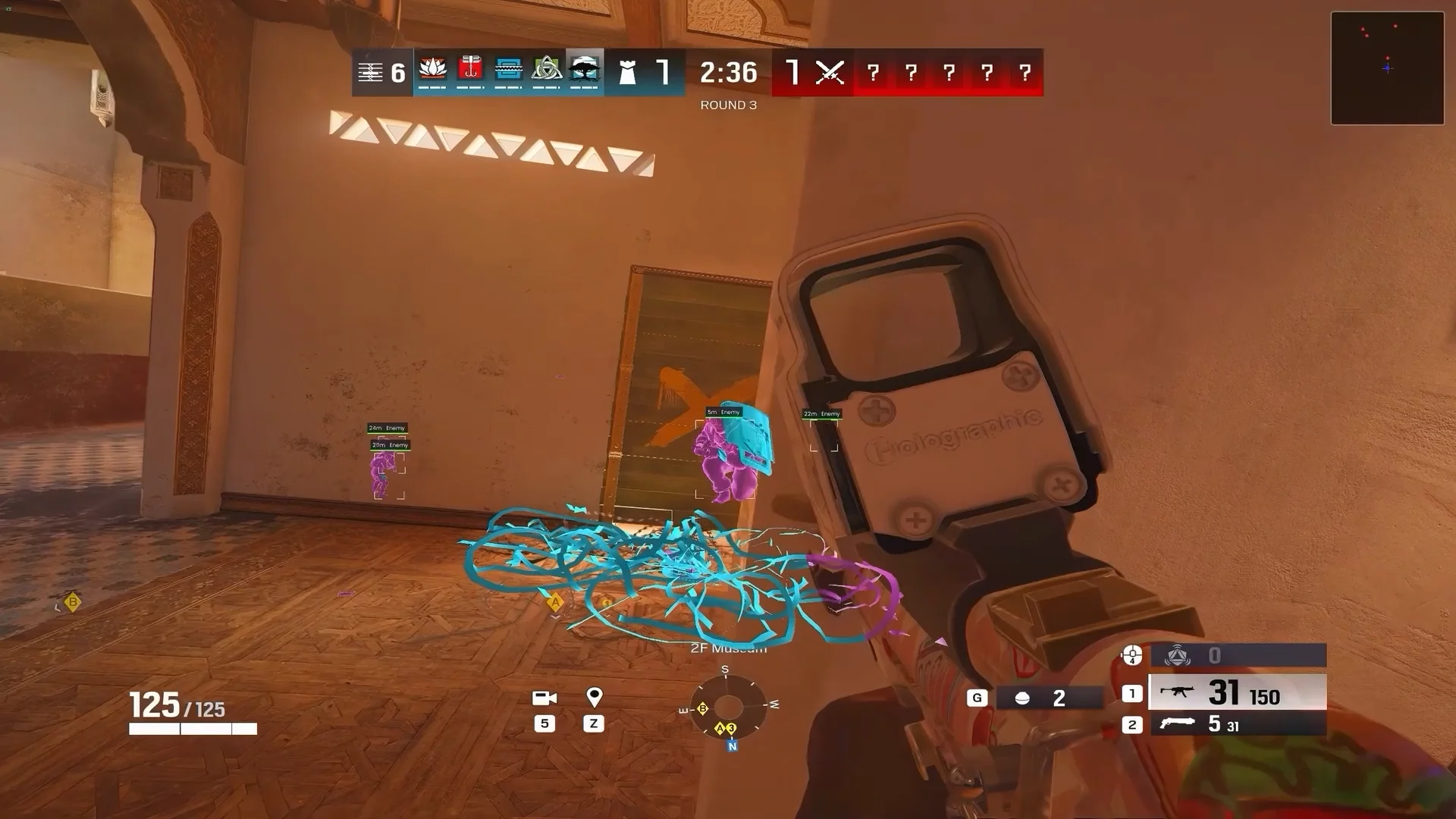
Game-specific versions of this: Rust, Rainbow Six, Battlefield 6, Fortnite and Apex Legends.
Pillar two: an account with a history
A brand new account raises two flags at once, and they are independent of each other. Other players see an unknown name at the top of the scoreboard and report it. Anti-cheat systems see a new account posting numbers no new account posts and start watching more closely.
What history actually buys you is a plausible improvement curve. If an established account's accuracy climbs, there are ordinary explanations: a new mouse, more practice, finally learning the recoil. A day-old account with professional statistics has no such story, and both automated systems and human reviewers notice.
How much history depends on the game. Thirty or so hours is enough in most shooters; in Rust, where accounts are measured in hundreds of hours, aim higher. You can build it by playing clean, by running ESP only until you get there, or by starting from an account that already has the hours on it, which is what our Rust and Arc Raiders account listings are for.
Pillar three: software that is actually built to hide
You can execute the first two pillars perfectly and still lose the account if the cheat itself is junk. Most paid cheats are overhyped, already detected, or simply not designed to stay under the radar, and the free ones are frequently not cheats at all.
What to look for: adjustable smoothing rather than a single aimbot toggle, a real visible check, stable frame rates, and a developer who is actively maintaining it. Beyond that, two things most stores will not give you. First, a live detection status you can check on the day you play rather than a marketing claim from six months ago, which is why we publish the status board for every product we sell. Second, a HWID spoofer, because in several of these games a ban reaches your hardware and without one that means new hardware. Several of our cheats include one automatically; standalone options are on the spoofers page.
The pillar nobody lists
There is a fourth thing, and it is the one that separates people who cheat for months from people who cheat for a weekend: how much you are willing to give up. Every feature that makes a cheat exciting in a showcase is a feature that ends accounts. Silent aim, no clip, maximum FOV, zero smoothing. They all work, they are all thrilling, and they are all instantly recognisable to anyone reviewing the footage.
The players who last mostly run information and very little else. Our four Arc Raiders strategies break down what that looks like in practice, including the version where you never fire an assisted shot at all, and the Frost R6 showcase covers what the same restraint looks like on a fully-featured build.
Where to start
Pick the game, read its guide above, and check the status board before you buy anything. The full catalogue is on the store, and if you want a recommendation for your situation, support answers day and night.
Frequently asked questions
Which pillar matters most?
The config, because it is the one you control every single round. History and software are decisions you make once; how you play is a decision you make continuously.
Do these rules really apply across every game?
The three pillars do. The specifics change: aim analysis makes aim features riskier in some games, hardware bans are harsher in others, and account-history expectations vary a lot. The per-game guides cover those differences.
Can I skip the account history part?
You can, and people do. It just means the other two pillars have to carry more weight, and you should expect a shorter life from the account.
Prefer to watch: we made a version of this for most games we sell, including Rust, Arc Raiders and Rainbow Six.